
Choosing the right material is one of the most important parts of 3D printing. The strength, appearance, and durability of a 3D printed part depend on the type of filament used. Among all materials, PLA, ABS, and PETG are the most commonly used in FDM 3D printing.
Understanding these materials helps you select the best option for your specific application.
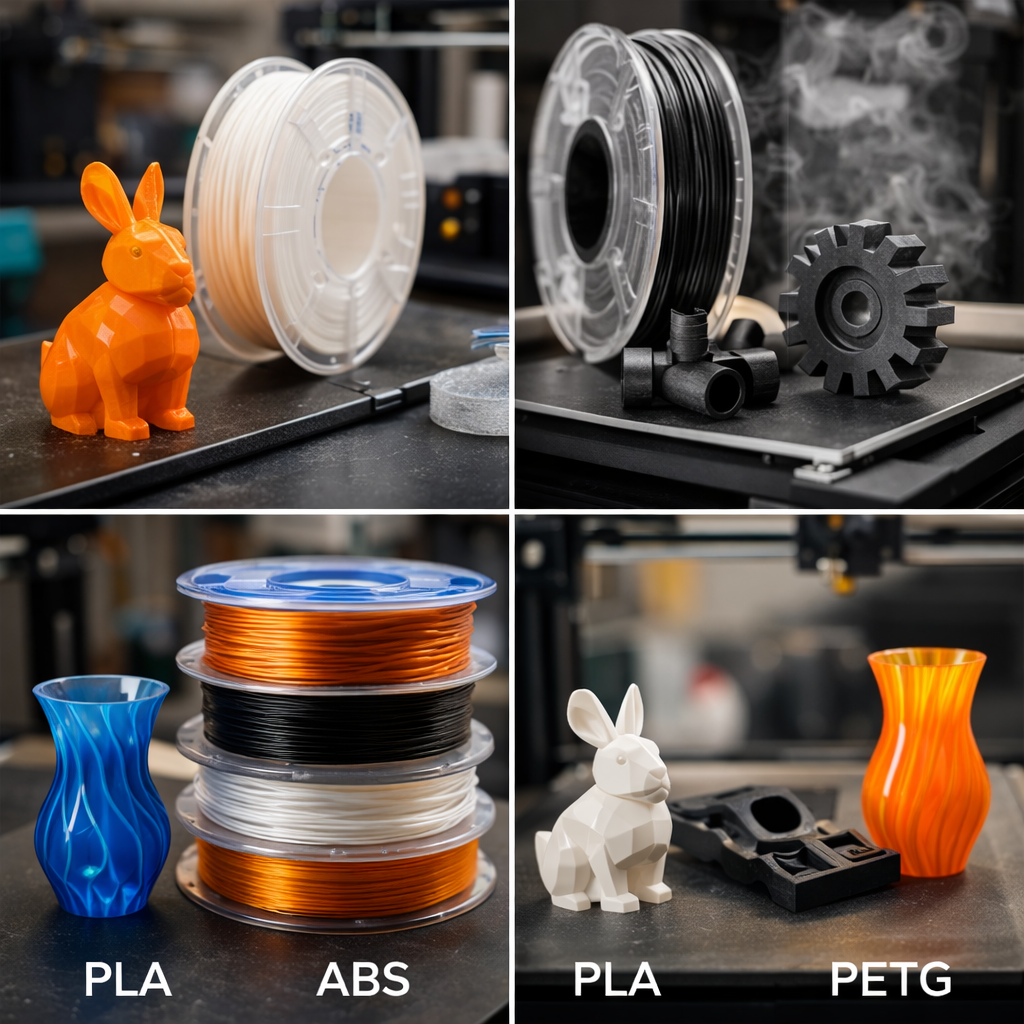
What is PLA?
PLA (Polylactic Acid) is a biodegradable plastic made from natural resources like corn starch. It is the easiest material to print and is widely used for models, decorative items, and educational projects.
PLA produces smooth surface finish and sharp details. However, it is not very heat resistant and is best suited for indoor use and non-mechanical parts.
What is ABS?
ABS (Acrylonitrile Butadiene Styrene) is a strong and durable plastic. It is commonly used for functional parts, mechanical components, and enclosures.
ABS can withstand higher temperatures and is more impact resistant than PLA. It is ideal for parts that need strength and durability.
What is PETG?
PETG (Polyethylene Terephthalate Glycol) is a combination of strength and flexibility. It is stronger than PLA and easier to print than ABS.
PETG is moisture resistant, durable, and suitable for outdoor use, making it ideal for containers, brackets, and industrial parts.
Comparison of PLA, ABS, and PETG
| Property | PLA | ABS | PETG |
|---|---|---|---|
| Strength | Medium | High | High |
| Heat resistance | Low | High | Medium |
| Ease of printing | Very easy | Moderate | Easy |
| Surface finish | Smooth | Slightly rough | Glossy |
| Best use | Models, décor | Functional parts | Industrial parts |
Which Material Should You Choose?
If you need decorative or educational models, PLA is the best choice. For strong mechanical parts, ABS is ideal. If you need durability with easy printing, PETG is the perfect balance.
Local 3D printing services can help you choose the right material based on your application and budget.
Conclusion
PLA, ABS, and PETG each serve different purposes in 3D printing. By understanding their properties and applications, you can select the best material for your project and get the highest quality results from your 3D prints.