
In modern manufacturing, speed, accuracy, and flexibility are critical. Traditional metal fixtures and jigs take time and money to manufacture. 3D printed fixtures and jigs provide a smarter alternative by allowing industries to create custom tools quickly and at lower cost.
Industries across automotive, electronics, and engineering are now using 3D printing to support production lines and quality control.
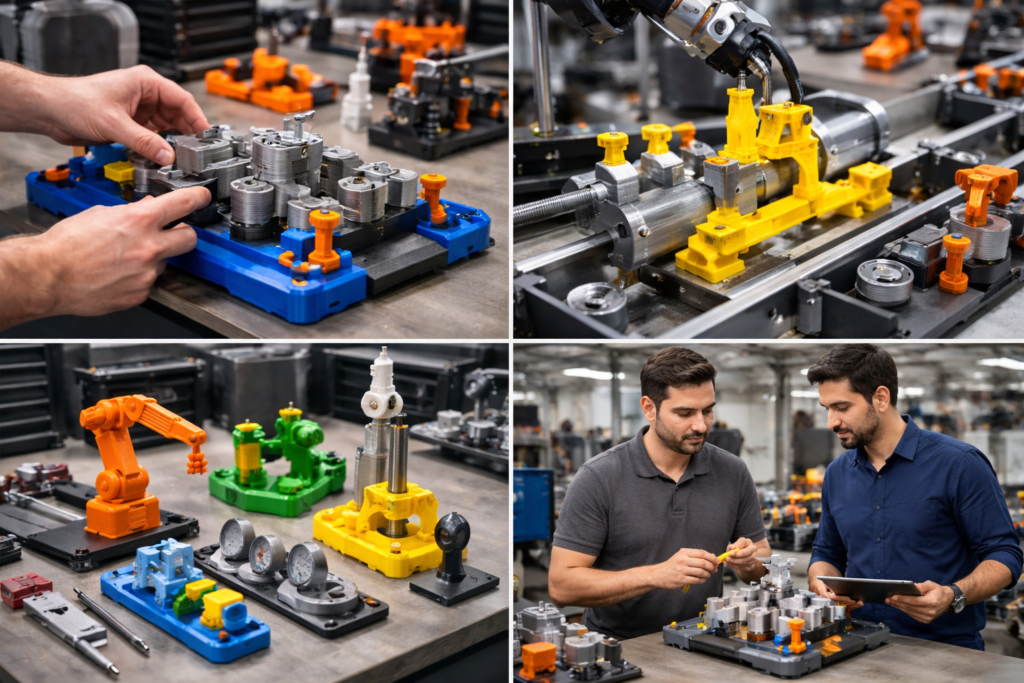
What Are Fixtures and Jigs?
Fixtures and jigs are tools used to hold, support, and locate parts during manufacturing and assembly. They ensure parts are positioned correctly, improving accuracy and reducing human error.
With 3D printing, these tools can be designed and produced exactly as needed for a specific operation.
How 3D Printing Improves Industrial Tooling
3D printing allows manufacturers to create lightweight, strong, and customized fixtures. Unlike metal tools, 3D printed fixtures can be modified easily when the design or production process changes.
This reduces downtime and improves production efficiency.
Industrial Use Cases
3D printed fixtures and jigs are used for:
Assembly line positioning
Welding and drilling support
Quality inspection
Component testing
Part alignment
These tools help industries maintain consistent quality and reduce errors.
Cost and Time Benefits
Traditional fixtures can take weeks to manufacture. With 3D printing, fixtures can be ready in days. This saves money on machining and reduces production delays.
Conclusion
3D printed fixtures and jigs are transforming industrial manufacturing. They provide faster production, lower cost, and greater flexibility, making them an essential tool for modern industries.
If you want to improve efficiency and accuracy in your factory, 3D printed tooling is the ideal solution.